Understanding Pope Leo XIV’s Dilexi Te: “I Have Loved You” by Fr. Matthew Hawkins
-
-
Pope Leo XIV: Apostolic ExhortationPope Leo in 'Dilexi te': Faith cannot be separated from love for the poor
Taking up Pope Francis’ desire “that all Christians come to appreciate the close connection between Christ’s love and His summons to care for the poor,” Pope Leo XIV issues his first Apostolic Exhortation, “Dilexi te,” as a call to Christ’s disciples “to recognize him in the poor and the suffering.”Vatican News Article on "Dilexi te" Read "Dilexi te" Online
"Dilexi te" PDF "Dilexi te" Reflection Guide
-
-
-
Chapter 5: Love in Action: Serving Christ Among the PoorNovember 23, 2025
 Chapter 5 of "Dilexi te" by Leo XIV, titled "A Constant Challenge", addresses the enduring struggle against poverty and the Church's mandate to champion the dignity and well-being of the poor. It highlights how societal structures often foster alienation, indifference, and inequality, thereby legitimizing the neglect of marginalized groups. The chapter emphasizes the pressing need to address the structural causes of poverty, warning that merely charitable or temporary solutions are insufficient to cure society’s ills. The Holy Father calls for fundamental changes—architectural, cultural, environmental, and economic—that prioritize justice and inclusion for the most vulnerable populations.
Integral to this challenge is the summons for all Christians to recognize the dignity of the less gifted, the weak, and those born with fewer opportunities. The chapter critiques society’s focus on individual success while urging recovery of moral and spiritual dignity through solidarity. Drawing from the parable of the Good Samaritan, Pope Leo XIV exhorts believers not to pass by suffering, but to engage with compassion and practical charity. The Church’s commitment is rooted in Gospel conviction: that love for the poor reveals true holiness and authentic faith. Ultimately, Chapter 5 asks the Church and its disciples to move beyond theory, cultivating love for the poor through direct action and transformation of unjust structures.
-
Chapter Four: Sin That Wears a SuitNovember 16, 2025
 Chapter 4 of Dilexi Te turns from historical foundations to a sober diagnosis of the present: sin does not merely lurk in private hearts; it becomes embedded in economic systems, political calculations, and cultural mentalities. The document draws on Medellín and Puebla to insist that poverty is not accidental but “structures of injustice” — a “social sin” requiring systemic conversion, not pious hand-wringing. The text condemns ideologies that enshrine “absolute autonomy of the marketplace,” producing a “dictatorship of an economy that kills” and widening the canyon between “those happy few” and the many for whom dignity remains theoretical. Crucially, it rejects the catechism of laissez-faire hope in “invisible forces” that will allegedly deliver justice if only we wait long enough. Salvation postponed is oppression prolonged.
Yet the exhortation refuses to render the poor as objects of elite rescue. Echoing Latin American pastoral theology, it affirms that the poor possess “unique insights indispensable to the Church and to humanity.” They are not scenery in a morality tale; they are subjects of history and evangelizers of the Church. Their cries are not ambient noise but prophetic summons. Thus, charity is not sentiment but “a force for change in history,” calling for political dialogue capable of addressing “the deepest roots” of exclusion. The implicit paradox: the Church must be poor to learn from the poor, powerful enough to confront power, and humble enough to receive the truth voiced from the margins. The fundamental question: will the Church risk being taught by those it claims to serve, or continue performing charity without conversion?
-
-
-
Chapter Three: "Not Charity — Mission: Catholic Schools"November 9, 2025
 In Chapter 3 of Dilexi Te, the Church speaks with a clarity that exposes our modern complacency: “since ancient times, Christians have understood that knowledge liberates, gives dignity, and brings us closer to the truth.” Here, education is not a boutique privilege or a ladder for the ambitious few; it is a theological claim, a human right rooted in the dignity of every child. “Teaching the poor,” the document insists, “was an act of justice and faith.” To educate is to declare that a child’s life matters, that they are made in God’s image, and that their horizon is not bounded by the neighborhood they were born into or the setbacks they have endured.
In this vision, Catholic education is not merely vocational training; it is a comprehensive approach to education. It is sacramental: forming souls to recognize goodness, hunger for truth, and perceive beauty as a window into God. “Children have a right to knowledge,” not simply as preparation for employment, but as preparation for freedom — interior, moral, and spiritual. Faith and culture together do not “indoctrinate” but liberate, sowing seeds of transformation and building a society shaped by justice, mercy, and human flourishing.
This vision is not abstract. It is why our parish remains committed to providing pastoral and spiritual support for St. Benedict the Moor School. In the Hill District neighborhood, St. Benedict the Moor School stands as a quiet rebellion against despair — a living testament that a Christ-centered education is not charity, but fidelity to the Church’s mission. With every lesson, students are reminded: You are seen. You are loved. You can rise.
-
Chapter Two: God Chooses the PoorNovember 2, 2025
 Chapter 2 establishes the theological foundation for the Church's preferential option for the poor. God's merciful love is manifested through his descent into human history to free humanity from slavery and death, and he addresses human poverty by becoming poor himself in the Incarnation. The preferential option for the poor reflects God's compassion toward human weakness and his special care for the discriminated and oppressed, as demonstrated throughout the Old Testament, where God is presented as the friend and liberator of the poor.
Jesus embodies this divine preference through his radical poverty from birth to death - born in a manger, living as an itinerant teacher without possessions, working as a carpenter, and experiencing the exclusion suffered by the poor. He proclaimed good news specifically to the poor, healed the marginalized, and overturned social prejudices that linked poverty with sin, declaring "Blessed are you poor, for yours is the kingdom of God."
The chapter emphasizes that love for God and love for neighbor are inseparable, with Jesus uniting the two great commandments. Works of mercy toward the poor authenticate genuine faith and worship, as illustrated in the parable of the Last Judgment and the Letter of James, which teaches that faith without works is dead. The early Christian community exemplified this through sharing goods and organizing care for widows, with the Bible promising blessings to those who give generously to others.
-
-
-
Chapter One: A FEW ESSENTIAL WORDSOctober 26, 2025
 In the opening chapter of his Apostolic Exhortation Dilexi Te ("I Have Loved You"), Pope Leo XIV establishes the fundamental connection between loving Christ and caring for the poor. He begins by reflecting on the Gospel story of the woman who anointed Jesus with costly perfume. While the disciples criticized this as wasteful, Jesus defended her, recognizing her love for him as the suffering Messiah. This small gesture of affection, Jesus said, would be remembered forever.
The Holy Father emphasizes that Jesus' words "the poor you will always have with you" must be understood alongside his promise "I am with you always." These are not separate realities but one truth: encountering Christ means encountering him in the poor. As Jesus taught, "Just as you did it to one of the least of these brothers and sisters of mine, you did it to me."
Pope Leo XIV recalls how Pope Francis chose his name after being reminded by a cardinal friend to "not forget the poor"—the same appeal Saint Paul received from the early Church leaders. Saint Francis of Assisi exemplifies this call, as his encounter with a leper transformed his life completely. The Pope notes that Francis "changed history" through his radical embrace of poverty.
The chapter concludes by emphasizing that God hears the cry of the poor throughout salvation history. The Church must listen to this cry as well, for in the wounded faces of the poor, we encounter Christ himself. This preferential love for the poor represents a path to holiness that every Christian is called to walk.
-
Dilexi Te: "I Have Loved You"October 19, 2025
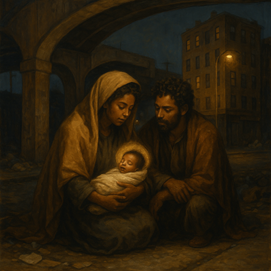 In his new apostolic exhortation Dilexi Te ("I Have Loved You"), Pope Leo XIV offers our Church a profound meditation on God's love revealed through solidarity with the poor.
The Holy Father structures his teaching in four movements, like a musical composition of divine mercy.
First, he reminds us that God revealed Himself in Scripture by hearing the cries of the oppressed: "I have observed the misery of my people." The poor aren't merely objects of charity—they're a lens through which we encounter God Himself.
Second, in the Incarnation, this compassion took flesh. Christ didn't merely teach about poverty; He embraced it—homeless, excluded, crucified. As St. Paul writes, "Though He was rich, He became poor." God saves by entering our destitution, not by avoiding it.
Third, the Church continues this movement. We are Christ's body only when we recognize our own poverty and find our treasure in the poor. From the early deacons to St. Francis, from medieval hospitals to today's food pantries, holiness is measured by our proximity to suffering.
Finally, Pope Leo calls us to contemporary mission: making love tangible through education, hospitality, and liberation. We must renounce comfort and speak with mercy's authority.
For our parish, this means Dilexi Te isn't just beautiful theology—it's a call to action. Our service to the poor isn't auxiliary to our faith; it's essential. When we encounter suffering, we encounter Christ. When we serve the vulnerable, we make God's love visible in our community today. 15
In his new apostolic exhortation Dilexi Te ("I Have Loved You"), Pope Leo XIV offers our Church a profound meditation on God's love revealed through solidarity with the poor.
The Holy Father structures his teaching in four movements, like a musical composition of divine mercy.
First, he reminds us that God revealed Himself in Scripture by hearing the cries of the oppressed: "I have observed the misery of my people." The poor aren't merely objects of charity—they're a lens through which we encounter God Himself.
Second, in the Incarnation, this compassion took flesh. Christ didn't merely teach about poverty; He embraced it—homeless, excluded, crucified. As St. Paul writes, "Though He was rich, He became poor." God saves by entering our destitution, not by avoiding it.
Third, the Church continues this movement. We are Christ's body only when we recognize our own poverty and find our treasure in the poor. From the early deacons to St. Francis, from medieval hospitals to today's food pantries, holiness is measured by our proximity to suffering.
Finally, Pope Leo calls us to contemporary mission: making love tangible through education, hospitality, and liberation. We must renounce comfort and speak with mercy's authority.
For our parish, this means Dilexi Te isn't just beautiful theology—it's a call to action. Our service to the poor isn't auxiliary to our faith; it's essential. When we encounter suffering, we encounter Christ. When we serve the vulnerable, we make God's love visible in our community today.
-